Daily Protein Guide by Body Weight and Goal
Choose a practical protein target for maintenance, muscle gain, fat loss, or body recomposition.
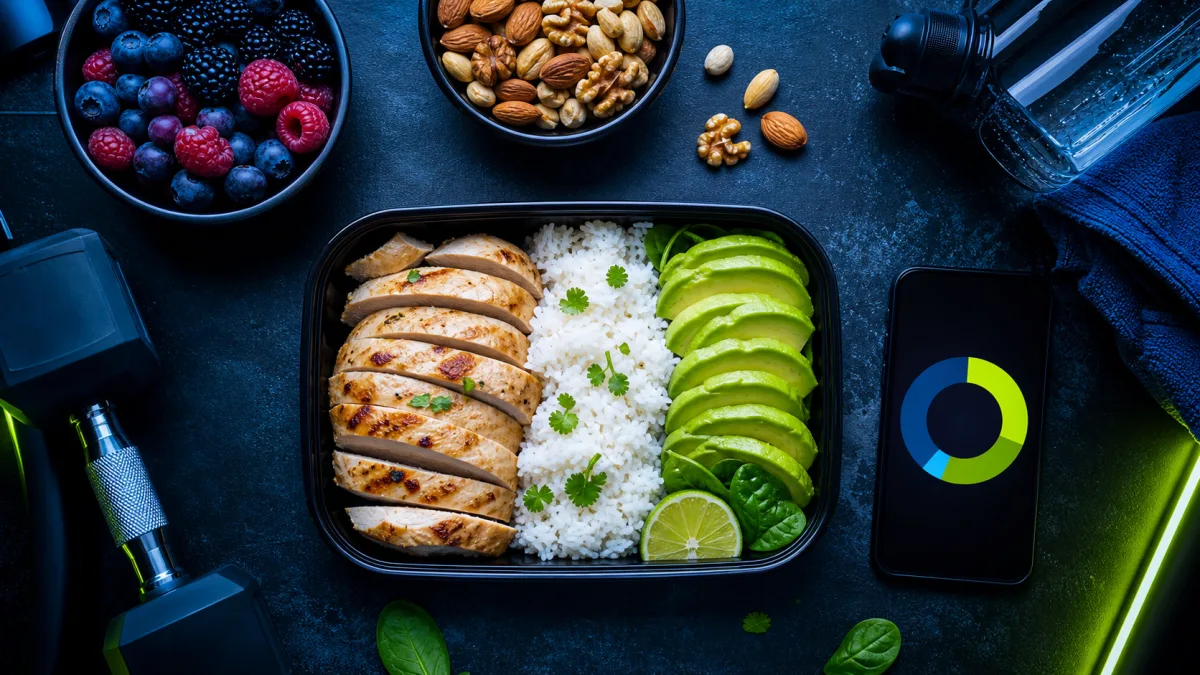
Protein supports muscle repair, growth, and retention. Your useful target depends on body size, training, energy intake, food preference, and health.
For active adults focused on strength or muscle, 1.6–2.2 grams per kilogram of body weight per day is a practical planning range. The protein calculator sets a goal-specific target from your body weight and training objective.
Protein targets by goal
| Goal | Starting range |
|---|---|
| General fitness | 1.2–1.6 g/kg |
| Maintenance with lifting | 1.4–1.8 g/kg |
| Muscle gain | 1.6–2.2 g/kg |
| Body recomposition | 1.8–2.2 g/kg |
| Calorie deficit | 1.8–2.4 g/kg |
These ranges are not medical prescriptions. Kidney disease and other conditions can require individualized guidance.
For a 75 kg person, 1.8 g/kg equals 135 grams daily. At four meals, that averages about 34 grams per meal.
Daily total matters most
Protein timing can be useful, but hitting a consistent daily target matters more than finding a perfect minute. Spread protein across three to five meals when practical. This can make the target easier to eat and provides repeated protein servings throughout the day.
The International Society of Sports Nutrition position stand reviews protein intake and distribution for healthy, exercising people.
Build meals around protein
Pick one primary protein source at each meal:
- Greek yogurt, cottage cheese, milk
- Eggs and egg whites
- Fish, poultry, lean meat
- Tofu, tempeh, seitan
- Beans and lentils
- Protein powder for convenience
Then add vegetables, fruit, carbohydrate sources, and fats based on your calorie needs.
Example 140-gram day:
| Meal | Protein |
|---|---|
| Yogurt, oats, fruit | 30 g |
| Chicken rice bowl | 40 g |
| Protein shake | 25 g |
| Salmon, potatoes, vegetables | 45 g |
Adjust for a calorie deficit
Dieting reduces available energy. Higher protein can support fullness and lean-mass retention, especially when paired with strength training. Choose leaner protein sources when calories are limited. Use the calorie deficit calculator to set your target intake, and the macro calculator to distribute your calories across all three macronutrients.
Do not remove carbohydrates automatically. Hard training uses glycogen, and reducing carbohydrates too far can make useful training volume harder to maintain.
Avoid protein mistakes
- Do not ignore total calories.
- Do not force very high intake that displaces fruit, vegetables, carbohydrates, or fats.
- Do not assume supplements are required.
- Do not count incomplete tracking as a precise result.
- Do not use a public calculator instead of medical guidance for kidney disease.
Choose the lower end of a reasonable range first. Increase only when your goal, appetite, and total diet support it. A target you reach consistently is more useful than an extreme number you abandon.
Useful calculators
Goal guides
Keep reading
How to Calculate Your Daily Calories
Estimate maintenance calories, choose a target for your goal, and adjust the number using real weight and training trends.
Read the guideLean Bulk Guide: Build Muscle With Less Fat Gain
Set calories, protein, training, and progress checks for a controlled muscle-gain phase.
Read the guideFrequently asked questions
How much protein do I need per day?
Roughly 1.6–2.2 g per kg of body weight if you train. General fitness needs are lower at 1.2–1.6 g/kg, and a calorie deficit pushes the range to 1.8–2.4 g/kg.
How much protein to lose fat without losing muscle?
Around 1.8–2.4 g per kg of body weight, combined with resistance training. Protein needs rise as the deficit deepens and as you get leaner.
Does protein timing matter?
Much less than total daily intake. Spreading protein across three to five meals is practical and makes a high target easier to hit.
Can I eat too much protein?
Healthy adults tolerate high protein intakes well. Anyone with kidney disease or a clinician-directed restriction should follow medical advice instead.